Dissertation | Research Areas & Trajectories | Projects in Progress
Dissertation
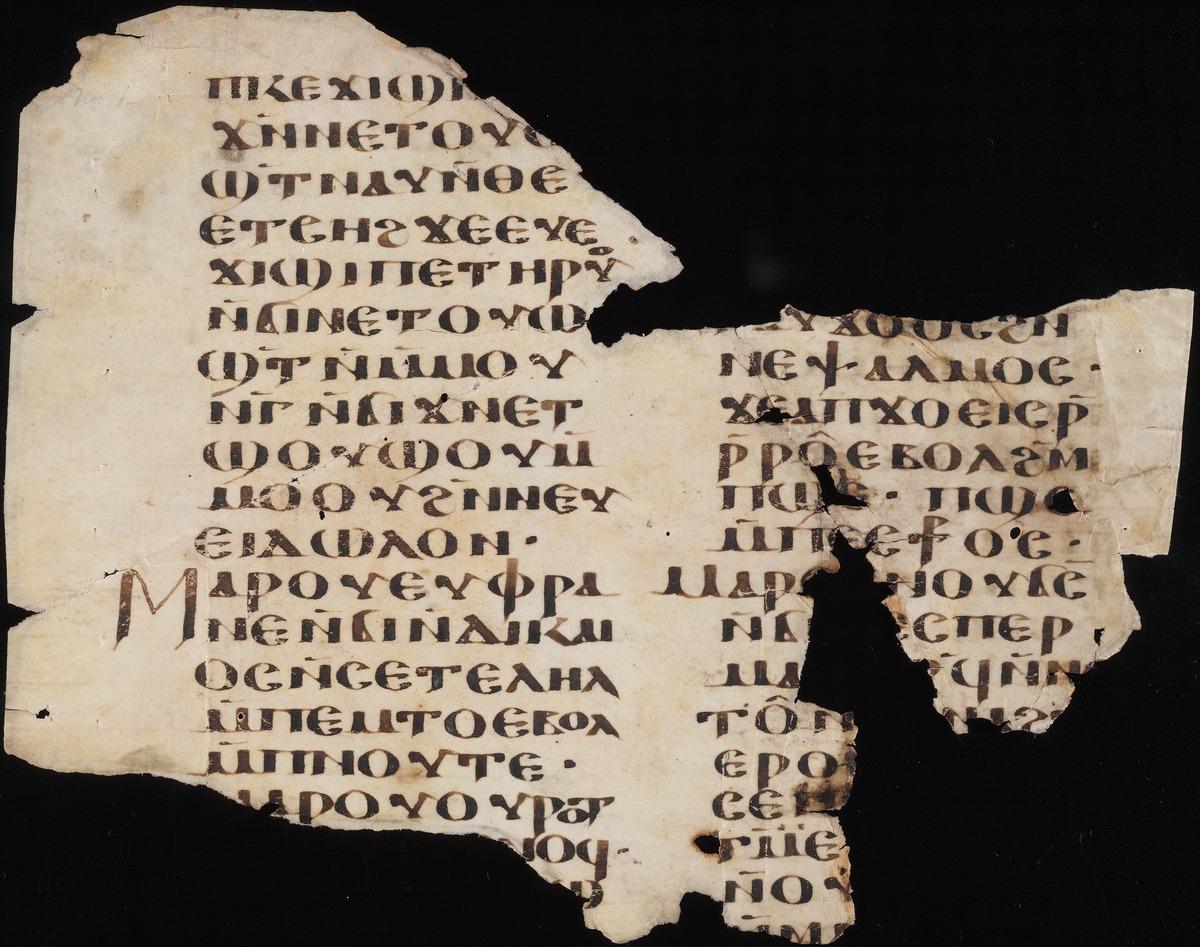
I recently finished a dissertation on the Shepherd of Hermas, a first- or second-century collection of visions, commandments, and parables given to a man known as Hermas. Building upon feminist and womanist theory, as well as classicists, religionists, and Americanists involved in slavery studies, I interrogate how the Shepherd crafts ideal Christian subjects as enslaved to God and God as an enslaver. I explore how believers in the Shepherd are made to be useful, loyal, and commodifiable, how Hermas himself functions as enslaved scribal labor, how spirit possession intersects with divine enslavement, and how enslaved agency plays out among God’s enslaved people. Through this work, I hold a space to explore and challenge how early Christian literature was often written in a way that normalized the desires and perspectives of the Roman enslaving elite, how biblical and classical scholars have often dismissed or euphemized language of enslavement to God, and how embedded language of enslavement is in and beyond ancient Mediterranean literature and thought.
Research Areas & Trajectories
My research and teaching interests span across over two millennia, although focus mostly on literature written between 200 BCE – 200 CE. I work especially with New Testament and early Christian literature, Greek and Latin literature of the Hellenistic and Roman eras, late ancient and Byzantine apocryphal literature, and the modern reception of ancient Mediterranean literature. My research largely utilizes Greek, Latin, and Coptic—although I continually am incorporating Syriac, Ge’ez (Ethiopic), and Hebrew.
I have five general trajectories for my research, although often extend past them.
Roman Enslavement and Colonial Expansionism
- Religious experiences and practices in ancient Mediterranean slave revolts
- Enslavement in New Testament, martyrdom, visionary, and acts literature (1st-4th ct.)
- The illusion of manumission in the Shepherd of Hermas
- Enslavement to deities in the eastern Mediterranean
- Enslavement of children in late ancient monasteries
- Criminalization of deities
- 19th ct. abolitionism & the rhetorical suppression of ancient slavery
Gender, Sexuality, and Sexual Violence
- Greek myth, sexual violence, and imperial spectacle in 1 Clement
- “Bisexuality” in Ovid’s Metamorphoses
- Sexual violence and victim blaming in Nag Hammadi literature
The Functions of Authorship and Attribution
- Authorial attribution in the Coptic Teachings of Silvanus (NHC VII,4)
- Attribution of the Shepherd of Hermas to Paul in Latin literature
- The interplay between pseudonymity, anonymity, and orthonymity in the ancient Mediterranean
Christian Anti-Judaism
- Judeophobia and anti-Jewish interpretations of the Epistle of James
- Healthcare, anti-Judaism, and martyrdom-by-fever in John Chrysostom’s Homilies against the Jews (4th ct.)
- Anti-Jewish claims to superior bases of religious knowledge in the Epistle to Diognetus
Christian Apocryphal Literature
- English translations and Greek editions of Byzantine apocryphal texts (3 Apocryphal Apocalypse of John; Dialogue Between Jesus and the Devil)
- Late ancient Christian anxieties regarding Islamic hegemony in the seventh-century eastern Mediterranean
- Reception of Genesis in the late medieval Ethiopic Mystery of the Judgment of Sinners
Projects in Progress
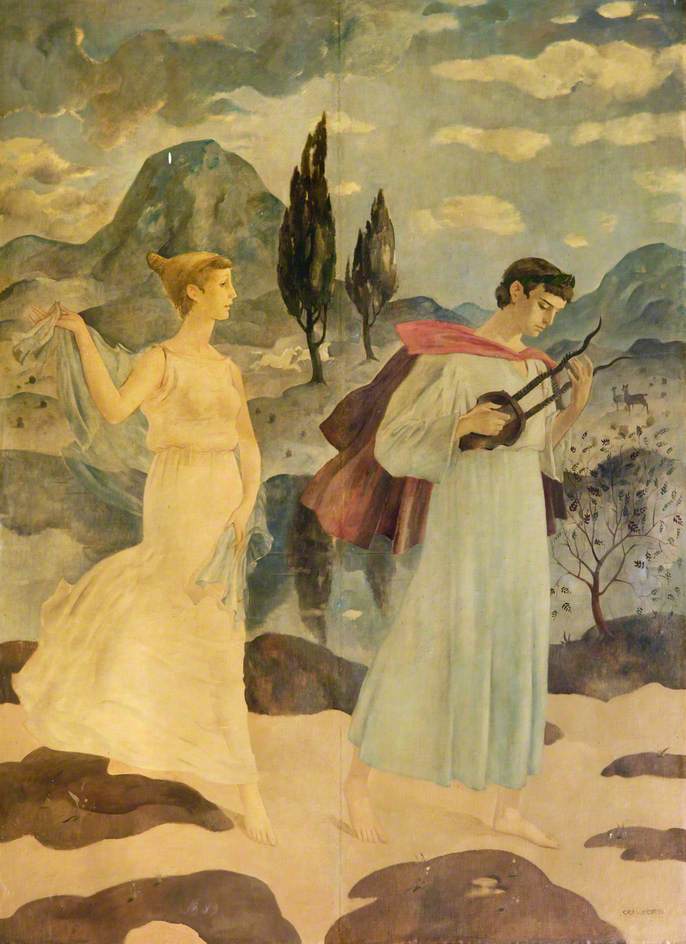
“Depathologizing the Bisexual Orpheus.” Forthcoming in Helios.
In some classical scholarship of the last few decades, Ovid’s depiction of Orpheus introducing pederasty to Thrace in Book 10 of the Metamorphoses has been described as “bisexual.” In this article, I ask how the subtle equation between pederasty and bisexuality may do more harm than good to LGBTQ+ classics students and scholars—particularly bi men. After providing an overview of the history of pathologizing bisexuality and homosexuality, as well as early applications of bisexual orientation to the ancient world, I turn to translations and interpretations of Met. 10.1–85 to explore how scholars have avoided, erased, euphemized, and used bisexual stereotypes to explain Orpheus’s attraction to boys. I conclude with some thoughts on how to read this passage in a manner that recognizes how Ovid uses pederasty and young boys as bodies to think with, as well as how readers might combat binegativity in their treatment of Ovid’s text.

“John Chrysostom’s Homily Against the Jews 8 as a Response to Antiochene Jewish Healthcare.” In the Journal of Late Antiquity.
In this article, I argue that John Chrysostom’s Adv. Jud. 8, the final sermon in a year-long series in Antioch, differs from the previous sermons in this cycle because its focus shifts from treating Jews as metaphorical illnesses to treating Jewish healers as a threat to his Christian congregation. I suggest that John constructs an anti-medicinal martyrdom that he offers to his congregants in order to: (1) encourage them to stay away from Jewish spaces and their healing practices, since they can only heal the body but not the soul; (2) reclaim ‘judaizing’ Christians who have fallen spiritually ill through seeking healthcare from Jews, and; (3) to be willing to suffer and die from fevers rather than seek out healthcare, since Jesus believes this is a commendable and exemplary form of martyrdom.
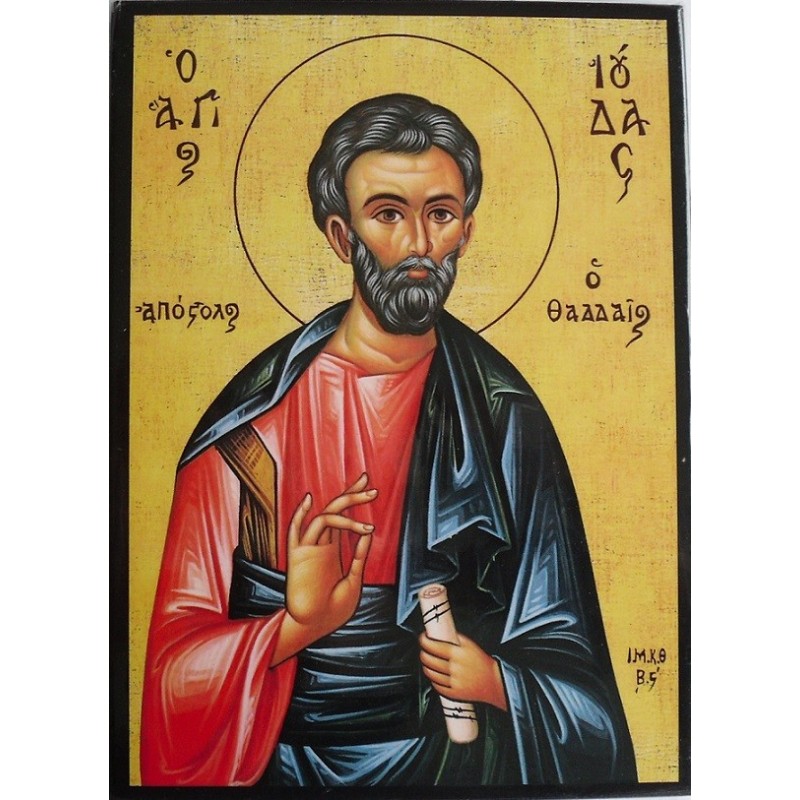
“Reading Slavery in the Epistle of Jude.” Journal of Biblical Literature 142.2 (2023).
In this article, I explore how the Epistle of Jude treats Jude and Jude’s readers as enslaved people (δοῦλοι) and Jesus as their enslaver or master (κύριος; δεσπότης). I examine how Jude conceives of Jesus’s enslaved people as being susceptible to bodily punishment, how enslaved loyalty ought to be enacted, and how the benevolence of the enslaver is portrayed as mercy. I also take note of how 1 Enoch is utilized by the writer of Jude to emphasize eschatological punishment of disobedient enslaved people.

“Hermas the (Formerly) Enslaved?: Rethinking Manumission and Hermas’s Biography in the Shepherd of Hermas.” Early Christianity 13.2 (2022): 205–226.
In this article, I argue that the scholarly consensus that the Shepherd of Hermas‘s author and protagonist is a freedperson (i.e. a formerly enslaved person) is not as obvious as it may seem. I examine the history of this claim, pointing especially to Theodor Zahn as the figure who popularized it in the latter half of the 19th century. Zahn’s argument for Hermas’s freedpersonhood depended both on a faulty understanding of how ancient enslavement functioned and on explicit anti-Semitic assumptions about Hermas’s various potential enslavers. I offer suggestions regarding what might change in our approach to the Shepherd if Hermas’s freedpersonhood is not presumed.

“Third Apocryphal Apocalypse of John”
Along with Tony Burke and Slavomir Čéplö, I translated 3 Apocryphal Apocalypse of John, a late ancient revelation dialogue between John and Abraham in which they discuss the fate of souls in the afterlife. 3AAJ is part of a larger repertoire of ancient texts that make use of John as a seer with privileged knowledge about the future. This is the first English translation of the text as part of the second volume of More New Testament Apocrypha (2020). We published a critical edition of the Greek manuscripts in Le Muséon (2020).

Authorial Fictions and Attributions in the Ancient Mediterranean (WUNT II; Tübingen: Mohr Siebeck)
In this forthcoming co-edited volume, Dr. Julia Lindenlaub and I have gathered scholars from a variety of disciplines to explore authorship and attribution. Inspired by recent scholarship in the study of the ancient world on the discursive function of authorship, this volume offers new contributions from scholars early Judaism and rabbinics, the New Testament and early Christianity, the Nag Hammadi codices, classics, Manichaeism, and the ancient near east.
 “Danaids and Dirces in Roman Corinth: Sexualized Violence and Imperial Spectacle in 1 Clement.“
This book chapter for Sex, Violence, and Early Christian Texts (eds. Christy Cobb and Eric Vanden Eykel; Lexington Books, 2022) focuses on the description of suffering early Christian women as “Danaids and Dirces” in 1 Clement. I argue that various scholars have attempted to erase this phrase because of a dual discomfort with pagans and women, and demonstrate that the comparison to Danaids and Dirces makes sense in light of Corinth’s own identity as a Roman imperial colony and Corinth’s early (and unexcavated) amphitheater.
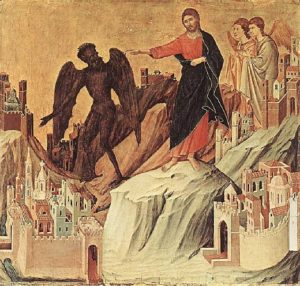
“Dialogue between Jesus and the Devil“
This late ancient dialogue provides additional narration of the Temptation scene (Matthew 4 and Luke 4) regarding the origin of the devil, his influence on the life of Jesus, and his fate at the end of days. This is the first English translation of the Greek text as part of the third volume of More New Testament Apocrypha. An updated edition of the Greek manuscripts will follow.
 “The Epistle of James and Anti-Judaism”
I am contributing a short chapter on James to a forthcoming volume on Anti-Semitism, Judeophobia, and the New Testament (edited by Eric Vanden Eykel, Sarah Rollens, and Meredith J.C. Warren). After introducing readers to the text of James, I highlight some of the ways that the text has been read and used for anti-Jewish purposes. I especially highlight Martin Luther’s role in the dismissal of James as too Jewish and how various contemporary scholars perpetuate this assumption.
Ancient Religion in Five Minutes
I am contributing two short responses in Ancient Religion in Five Minutes: “What is Gnosticism?” and “Was there Anti-Semitism in Antiquity?” These short essays are intended to quickly give non-specialist readers an overview of the complexities of the rhetorical and categorical issues around “Gnosticism,” as well as to highlight ancient anti-Semitism as a form of racism and ethnic discrimination.